

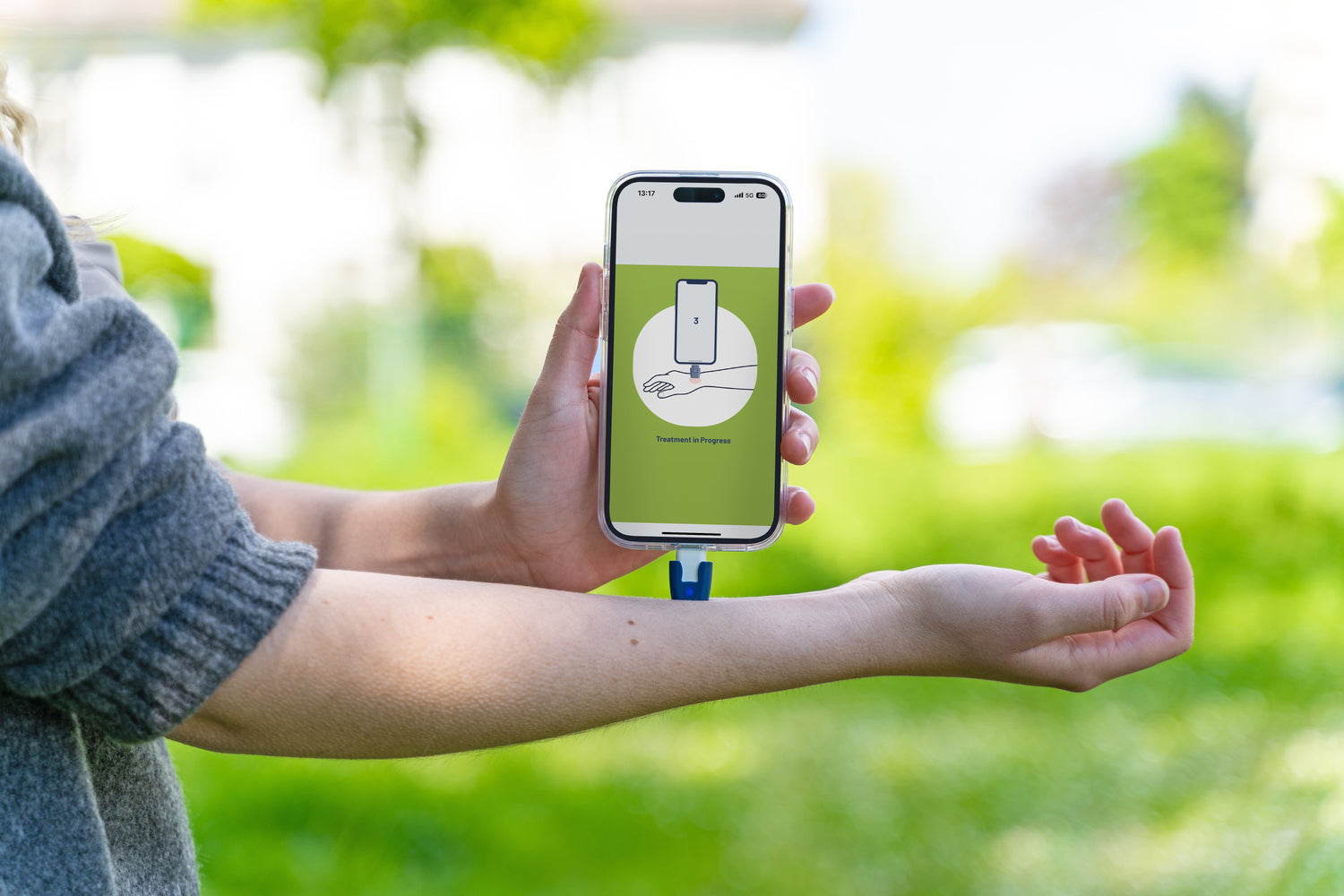
An evening outdoors. A single bite. And suddenly the itch takes over.
Insect bites are small, but the irritation they cause can be surprisingly intense. The reason lies in how our nervous system reacts to a bite — and why a short, controlled application of heat therapy can make a real difference for insect bite itch relief.
What causes the itch after an insect bite?
When an insect bites, it injects saliva into the skin. Your immune system recognises this as foreign and releases histamine as part of its response.
Histamine:
- widens blood vessels
- increases local swelling
- activates nerve endings in the skin
Those nerve endings send signals to the brain that are interpreted as itch and discomfort. Scratching feels instinctive, but it often worsens irritation and can prolong the sensation of itchy insect bites.
How heat therapy stops insect bite itch
Local hyperthermia uses a short, controlled burst of heat applied directly to the bite site. This heat stimulus interacts with nerve signalling at skin level — this is how heat stops itch.
In simple terms:
- the heat creates a brief, targeted impulse
- this impulse interferes with how the itch signal is transmitted
- when the signal weakens, the sensation of itch can settle
The effect is not numbing or masking. It is a physical interaction with how nerve signals are processed — a heat-based approach to insect bite itch relief.
Evidence-based insect bite relief: The Charité study
The principle of using heat for insect bites is not new. What has changed is how precisely it can now be applied.
In 2023, Kamedi GmbH, the manufacturer of heat it®, collaborated with Charité – Universitätsmedizin Berlin on a large real-world observational study. More than 12,000 individual treatments were documented.
Participants reported:
- a measurable reduction in itch intensity within minutes
- reductions that continued over time after application
This clinically studied insect bite treatment examined how controlled heat performs under everyday conditions, not just in laboratory settings.
Why precision matters in heat therapy for insect bites
Applying heat to the skin requires control. Temperature, duration, and focus all matter.
With heat it®:
- heat is applied for just a few seconds
- temperature is controlled within a defined range (approximately 47–52 °C, depending on settings)
- the application area is small and targeted
This precision allows the method to be repeatable and consistent, without damaging the skin when used as directed.
A physical method for insect bite relief, not a topical one
Unlike creams or sprays, heat-based treatment does not rely on substances left on the skin.
This means:
- no residue to transfer to hands, eyes, clothing, or bedding
- no waiting time for absorption
- no risk of leaking tubes in bags or packs
For many people seeking insect bite relief without cream, this simplicity is as important as the effect itself.
[Read more: From Creams to Clean Heat]
Designed for real-life use
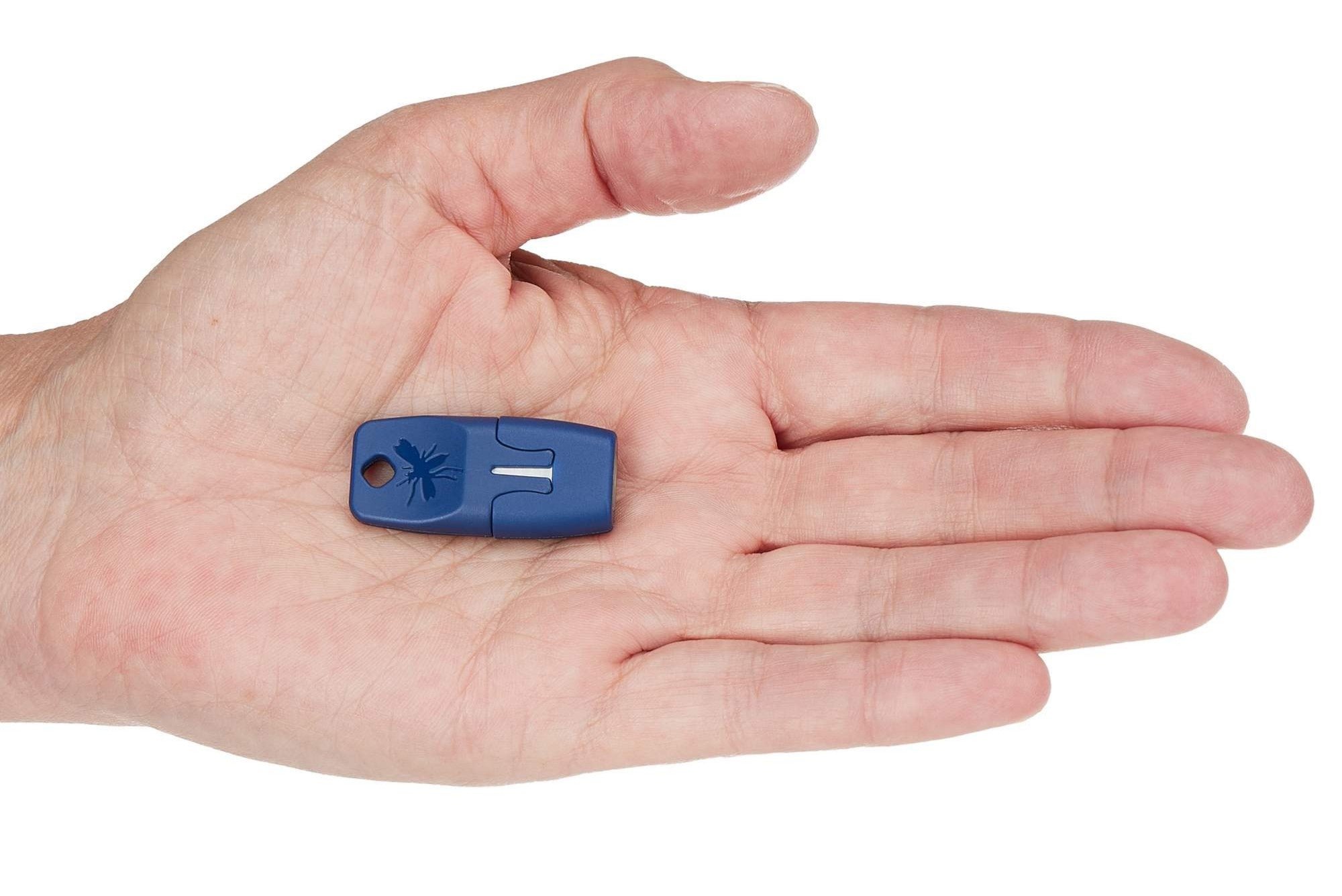
heat it® draws a tiny amount of power directly from a smartphone through the charging port. An accompanying app guides timing and temperature for each application.
Key characteristics:
- no separate battery
- no refills
- treatments take 4, 7, or 9 seconds
- suitable for children from 3 years with adult help, self-use from 12 years
If you have your phone with you, this portable insect bite treatment is available.
Why heat therapy works for everyday bite situations
Bites rarely happen at convenient times. They happen outdoors, while travelling, or during busy family moments.
A short, guided heat application fits into those situations because it:
- works quickly
- can be repeated if needed
- does not interrupt routines
This makes heat therapy for insect bites a practical option for people who spend time outdoors, travel frequently, or prefer a clean, non-topical method.
A simple conclusion: How heat stops the itch
Itch is a nerve signal. Heat interacts with that signal.
By applying a brief, controlled burst of warmth directly to the bite site, local hyperthermia offers a physical way to reduce the sensation of itch — without creams, residue, or complicated routines.
Sometimes, a small change in method makes everyday life easier.
Indication and safety (New Zealand):
heat it® is indicated for bites and stings from mosquitoes, horseflies, bees, and wasps. Use only on intact skin and follow the instructions. Suitable for children from 3 years with adult help, self-use from 12 years. This is a medical device. Read the instructions before use and use only as recommended.
[Discover heat it® Classic] | [Read: heat it® Around the World]


Leave a comment
This site is protected by hCaptcha and the hCaptcha Privacy Policy and Terms of Service apply.